
Published 30 June 2026
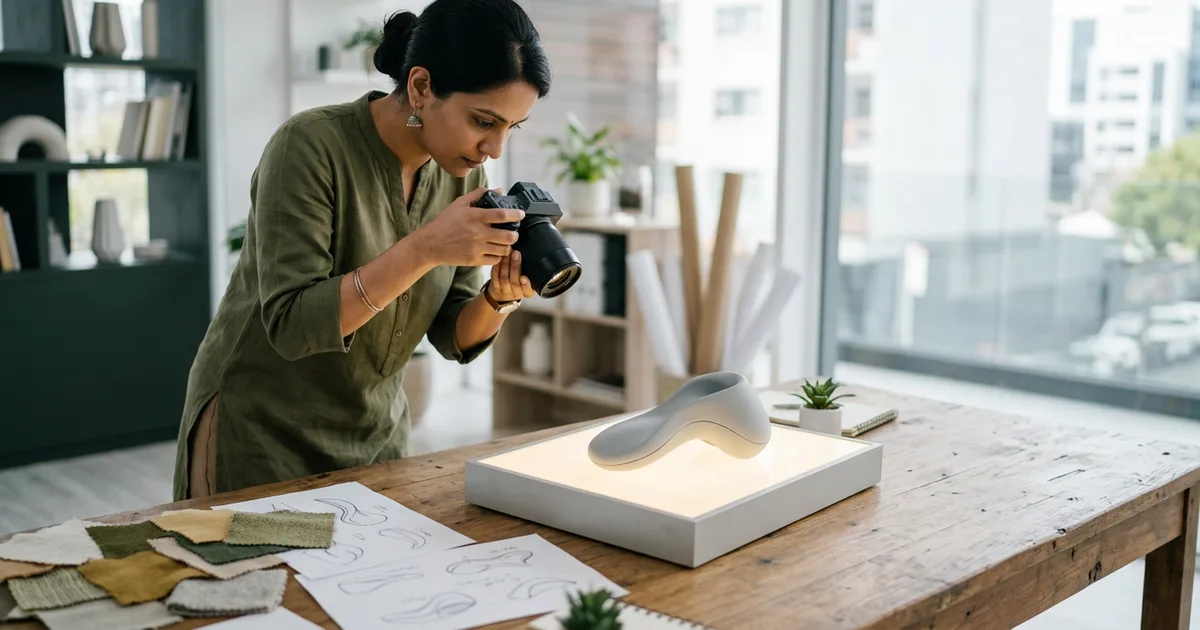
If your product's shape, pattern, or visual appearance gives it a competitive edge, a trademark alone won't protect that — you need design registration under the Designs Act, 2000. Design registration protects the visual features of an article — its shape, configuration, surface pattern, or ornamentation — for up to 15 years, and it is a separate right from both trademark and copyright protection.
What qualifies as a registrable design
A "design" under the Act means features of shape, configuration, pattern, ornament, or composition of lines or colours applied to an article, whether in two or three dimensions, by an industrial process, and judged solely by the eye. To be registrable, the design must be new or original, not previously published or used anywhere, and significantly distinguishable from known designs.
- Applies to the visual appearance of a manufactured article (a bottle shape, a furniture design, a textile pattern)
- Must be new/original and not disclosed before filing
- Judged by visual appeal, not by how the article functions
What is excluded from design protection
Several categories cannot be registered as designs even if visually distinctive:
- Trademarks and property marks (these fall under trademark law instead)
- Artistic works under the Copyright Act — paintings, sculptures, engravings, photographs, and works of artistic craftsmanship
- Purely functional or mechanical features that exist only because of the function the article performs, not its appearance
- Items the Design Office classifies as non-registrable by practice, such as book jackets, calendars, greeting cards, postcards, and stamps
The registration process through IP India
Design applications are filed with the Designs Wing of the Indian Patent Office (part of IP India) and classified under the Locarno Classification system, which groups articles into numbered classes. The process runs through these stages:
- Pre-filing search of the Indian Register of Designs and international databases to check for conflicting designs
- Filing Form 1 with applicant details, the article name, Locarno class, representations of the design, and the prescribed fee
- Examination by a Design Examiner for novelty, originality, and compliance with the Act
- Responding to any objections raised in an examination report
- Registration and issue of a certificate once objections are cleared
Turnaround varies with the examination queue, but applications that are in order from the start are often registered within a few months of filing.
Validity period: 10 years, extendable by 5
A registered design is protected for 10 years from the date of registration. Before that period expires, the proprietor can apply to the Controller, with the prescribed fee, to extend protection for a further 5 years — giving a maximum total term of 15 years. There is no renewal beyond that; once the 15-year period lapses, the design falls into the public domain.
How this differs from trademark and copyright protection
The same product can carry multiple, non-overlapping IP rights:
- Design registration protects how an article looks — its shape and ornamentation — for up to 15 years, tied to an industrial article.
- Trademark registration protects a brand identifier — a name, logo, or in some cases a distinctive product shape used as a source indicator — and can, in principle, be renewed indefinitely.
- Copyright protects original artistic, literary, or creative works and generally isn't available for something once it has been registered (or is registrable) as an industrial design, though the underlying artwork before industrial application may retain copyright.
A business that wants full protection of a distinctively shaped product typically needs to consider design registration for the shape and a separate trademark filing for the brand name or logo applied to it. BookMyTM works with businesses across India to identify which of these protections actually apply to a given product and to handle the IP India filing process end to end.
How long does a registered design stay protected in India?
Ten years from the date of registration, extendable once by five more years for a maximum of 15 years total.
Can I register both a design and a trademark for the same product?
Yes — a design registration protects the article's shape/appearance, while a trademark protects a brand name, logo, or distinctive source-identifying feature; they serve different purposes and can coexist.
Can I register a logo or brand name as a design?
No. Trademarks and property marks are expressly excluded from design registration and must be filed under trademark law instead.
Does design registration protect how a product works?
No. Design law protects visual appearance only — purely functional or mechanical features dictated by function are not registrable.
What happens if I don't extend my design registration after 10 years?
If you don't apply for the five-year extension before the initial 10-year term ends, the design loses protection and enters the public domain.