
Published 16 September 2026
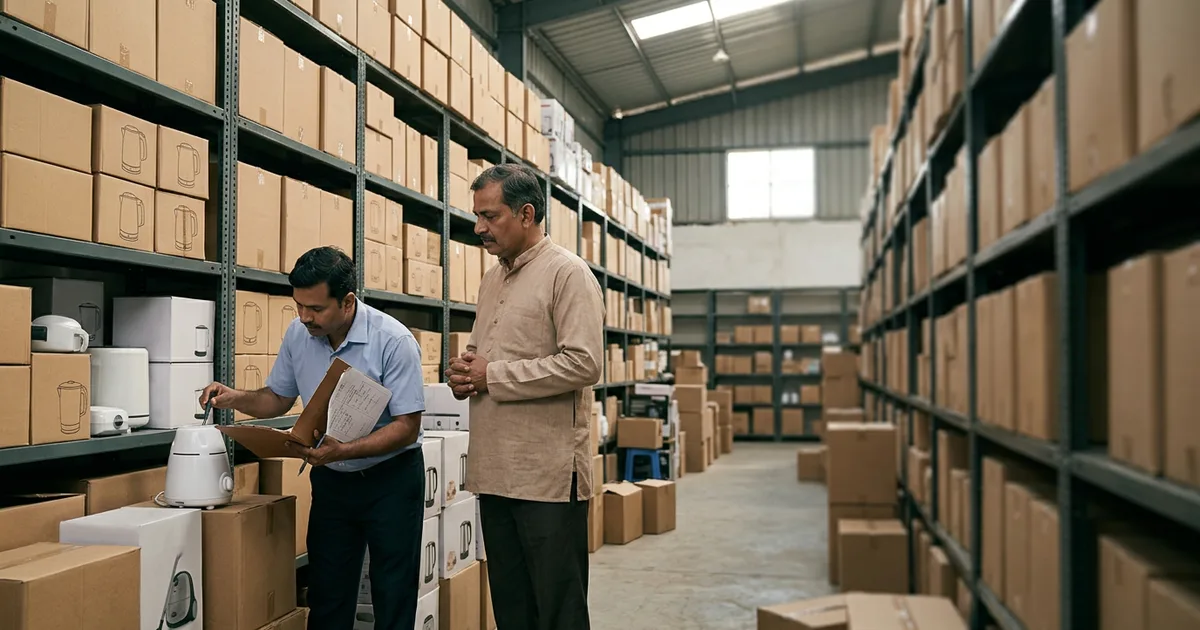
From 1 October 2026, ninety categories of household and commercial electrical appliances, from vacuum cleaners and food processors to commercial ovens and battery-operated toothbrushes, can be manufactured, imported or sold in India only with the BIS Standard Mark (the ISI mark) under a licence. The requirement comes from the Safety of Household, Commercial and Similar Electrical Appliances (Quality Control) Order, 2026, notified by DPIIT as S.O. 1739(E) on 6 April 2026. It binds importers, distributors and retailers as well as manufacturers, and the Bureau of Indian Standards is both certifying and enforcing authority.
What does the 2026 Quality Control Order require?
A Quality Control Order under section 16 of the BIS Act, 2016 makes an Indian Standard compulsory, so the product may be placed on the market only with the Standard Mark. This Order makes IS 302 (Part 1): 2024, the Indian adoption of IEC 60335-1:2020 (general safety requirements for household and similar electrical appliances), compulsory for the appliances in its schedule. Certification is under Scheme-I of the BIS (Conformity Assessment) Regulations, 2018: product testing, a factory assessment and a licence, followed by BIS surveillance. The 2026 Order supersedes the 2025 Order of the same name.
Which appliances are covered?
The Order applies to electrical appliances intended for household, commercial or similar use with a rated voltage not exceeding 250 V for single-phase appliances and 480 V for others, and it expressly includes DC-supplied and battery-operated appliances. The schedule lists ninety categories. The main groups:
- Kitchen: food processors, grinders, juicers, coffee makers, kettles and other liquid heaters, hot plates, cooking ranges, hobs, ovens, steam cookers, fryers, toasters, ice-cream machines, dishwashers, food waste disposers.
- Cleaning: vacuum cleaners, water-suction cleaners, floor and wet-scrubbing machines, steam surface cleaners, fabric steamers.
- Personal care: shavers and hair clippers, massagers, oral hygiene appliances, skin and beauty-care appliances including laser and intense-light devices, sauna heaters.
- Heating and comfort: electric blankets and pads, foot warmers, storage room heaters, immersion heaters, humidifiers, air cleaners, insect killers.
- Commercial catering: ranges, griddles, fryers, convection and steam ovens, boiling pans, bains-marie, food warmers, dishwashers, rinsing sinks, kitchen machines, hoods, vacuum packagers.
- Others: garage-door drives, aquarium and pond appliances, whirlpool baths, amusement machines, personal e-transporters, motorised furniture, and gas, oil or solid-fuel appliances with electrical connections.
- Battery and DC versions of vacuum cleaners, shavers, massagers, blenders, toothbrushes, foot warmers and air purifiers, listed separately so cordless products are not left out.
The full schedule is in S.O. 1739(E). An appliance within the voltage limits and not under another Order should be assumed in scope until the schedule says otherwise.
The three dates: 1 October 2026, 1 January 2027, 1 April 2027
- 1 October 2026 – the Order takes effect for manufacturers in general, including all importers.
- 1 January 2027 – small enterprises get three more months.
- 1 April 2027 – micro enterprises get six more months.
The extra time attaches to the manufacturer's Udyam classification, so an unregistered micro unit cannot show it qualifies. Stock manufactured or imported before the relevant date may be sold for up to six months after it, but only on a declaration to BIS by the manufacturer; there is no unconditional sell-through.
Who is bound: not only the manufacturer
Once a standard is compulsory, section 17 of the BIS Act prohibits any person from manufacturing, importing, distributing, selling, hiring, leasing, storing or exhibiting for sale the goods without the Standard Mark under a valid licence. That reaches the whole chain: the importer clearing a container at Cochin or Nhava Sheva, the distributor holding stock, the retailer with unmarked goods on the shelf, the marketplace seller. Foreign factories obtain the licence through BIS's Foreign Manufacturers Certification Scheme; an Indian importer cannot certify on a supplier's behalf and should confirm the supplier's licence before ordering for delivery after 1 October.
What is exempt?
- Goods manufactured in India for export.
- Up to two hundred units a year imported by an appliance manufacturer for research and development, not for sale and disposed of as scrap.
- Products already under another Quality Control Order or Act.
What are the penalties?
Section 29(3) of the BIS Act, 2016 makes contravention of section 17 punishable with imprisonment of up to two years, or a fine of not less than two lakh rupees for a first contravention and not less than five lakh rupees for a later one, extendable to ten times the value of the goods, or both. Where the value cannot be determined, a year's production is presumed in contravention and the previous year's turnover is taken as the value. BIS also seizes non-conforming stock.
How does a manufacturer get the licence?
- Apply on BIS's ManakOnline portal for a Scheme-I licence against IS 302 (Part 1): 2024, one application per manufacturing location.
- Have the product tested at a BIS-recognised laboratory: insulation, earthing, leakage current, temperature limits, mechanical strength, fire resistance and markings.
- Host the factory assessment by a BIS officer, covering in-house testing and quality control.
- Receive the licence (a CM/L number), apply the Standard Mark with it, and keep the records BIS surveillance will inspect.
Allow months, not weeks: laboratory queues lengthen as a large Order approaches its date.
Also taking effect on 1 October 2026
BIS's list of notified Orders shows the same date for pipe wrenches, spanners and pliers, wrought aluminium utensils and aluminium beverage cans, with PP/HDPE woven sacks on 6 October. A Kerala hardware or kitchenware trader stocking imported tools and utensils alongside small appliances has several deadlines in one week.
Frequently Asked Questions
From when is the ISI mark mandatory for electrical appliances?
From 1 October 2026 under S.O. 1739(E) of 6 April 2026. Small enterprises have until 1 January 2027 and micro enterprises until 1 April 2027.
Does the Order apply to importers and shops, or only to manufacturers?
To everyone in the chain. Section 17 of the BIS Act prohibits manufacturing, importing, distributing, selling, hiring, leasing, storing or exhibiting for sale the covered appliances without the Standard Mark.
Which standard must the appliances meet?
IS 302 (Part 1): 2024, the Indian adoption of IEC 60335-1:2020, certified under Scheme-I of the BIS (Conformity Assessment) Regulations, 2018.
Can existing stock be sold after 1 October 2026?
For up to six months after the applicable date, but only on a declaration by the manufacturer to BIS. Without it, the stock is non-compliant from that date.
What is the penalty for selling appliances without the ISI mark?
Under section 29(3) of the BIS Act, 2016: up to two years' imprisonment, or a fine of at least two lakh rupees (five lakh for a repeat), extendable to ten times the value of the goods, or both, plus seizure of stock.
Sources
DPIIT, S.O. 1739(E), 6 April 2026 (Gazette of India); Bureau of Indian Standards, "Upcoming QCOs notified and due for implementation"; Bureau of Indian Standards Act, 2016, sections 16, 17 and 29. Check the Order's schedule for your product before relying on this summary.
BookMyTM assists manufacturers and importers in Kerala and across India with BIS licence applications, testing coordination and the Udyam registration that small and micro enterprises need for their later dates.