
Published 16 September 2026
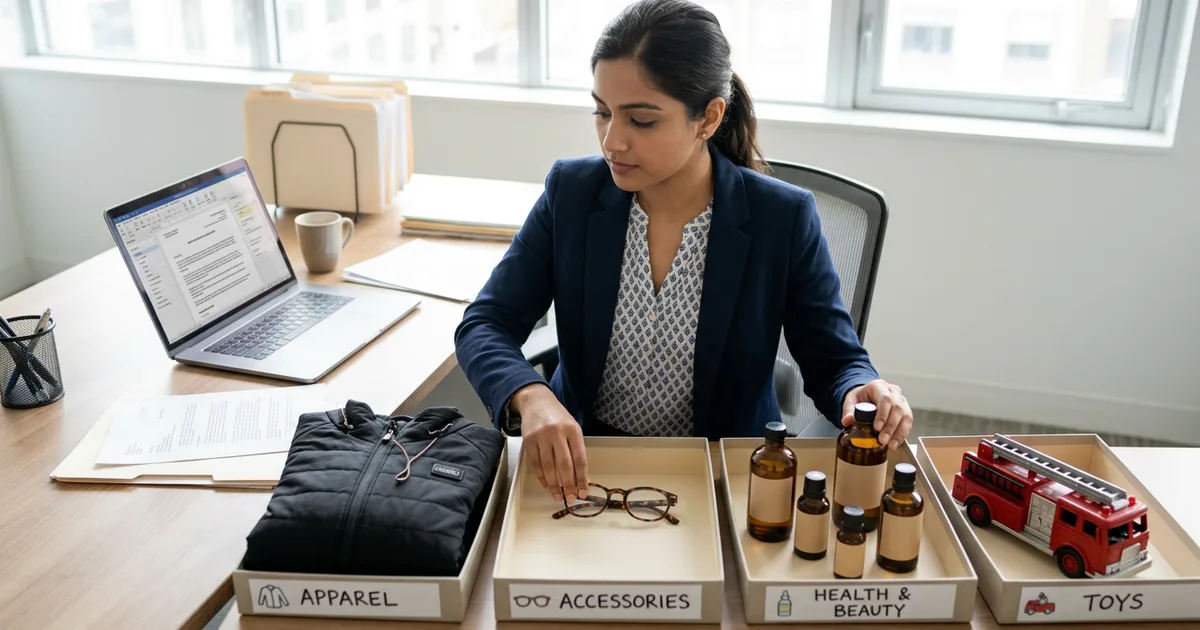
Every trademark application in India is filed in one or more of 45 classes, 34 for goods and 11 for services, taken from the Nice Classification that WIPO maintains under the Nice Agreement. The 13th edition, cited as NCL (13-2026), took effect on 1 January 2026. It moves a number of everyday goods from one class to another, splits essential oils by purpose, and writes artificial-intelligence services, notarial services and several other modern specifications into the list for the first time. Applications filed on or after 1 January 2026 are examined against the new edition; earlier filings and registrations are not reclassified. For anyone filing a mark in 2026, and for anyone whose registration covers eyewear, heated clothing, emergency vehicles, essential oils or software services, the changes decide whether the class on the form is the right one.
Goods that moved class
- Spectacles, sunglasses and contact lenses: Class 9 to Class 10, reflecting their medical and protective function rather than their optical technology.
- Emergency vehicles such as fire engines, ambulances, lifeboats and rescue rafts: Class 9 to Class 12, so that all vehicles sit in one class.
- Electrically heated clothing, jackets, gloves and socks: Class 11 to Class 25, treated as clothing first and heating apparatus second.
- Terpenes: Class 3 to Class 1, as industrial chemicals.
- Tongue scrapers: Class 10 to Class 21, alongside other oral-hygiene articles that are not medical instruments.
- Nozzles for water hoses: Class 21 to Class 17.
- Buttercream: Class 29 to Class 30, with the other confectionery preparations.
Essential oils are now classified by purpose
Until the 12th edition, essential oils sat uniformly in Class 3. The 13th edition classifies them by use: perfumery and cosmetic oils in Class 3, oils for medical or aromatherapy use in Class 5, industrial oils in Class 1, and flavouring oils for food in Class 30. A Kerala ayurvedic or aromatherapy business that has always filed its oils in Class 3 alone should check, before its next application, whether its actual products now fall in Class 5 or Class 30 as well. Yoga goods were sorted on the same principle: yoga blocks and similar equipment in Class 28 as sports articles, yoga gloves in Class 25 as clothing.
New specifications in the services classes
- Artificial intelligence as a service, meaning AI functionality delivered over the internet or a platform, is expressly listed in Class 42 alongside software as a service; a startup offering an AI tool no longer has to describe it by analogy.
- Notarial services are expressly included in Class 45 with other legal services.
- Airport lounge services appear in Class 43 for the first time.
- Rage rooms and similar smash-room entertainment are in Class 41.
- New goods terms include life jackets for pets (Class 9), wallcoverings of artificial plants (Class 27) and stress balls (Class 28).
What it means for a pending or registered Indian mark
The edition is not retrospective. A registration for spectacles in Class 9 obtained in 2024 stays in Class 9; the Trade Marks Registry does not reclassify it, and WIPO does not reclassify international registrations that predate 1 January 2026. The practical consequences are on the search side. A clearance search for a new eyewear brand must now cover both Class 9, where the older marks are, and Class 10, where new ones will be filed; the same is true of Class 11 and 25 for heated clothing and Class 9 and 12 for emergency vehicles. An owner extending an old registration to new products should file the new application in the class the 13th edition prescribes, not the class the old certificate shows. The Registry's TMclass listings and WIPO's Madrid Goods and Services Manager have been updated, and an examination report citing a wrong class is the usual way an applicant finds out.
Filing in Kerala in 2026: a short checklist
- Draft the specification from the 13th edition's alphabetical list rather than copying a competitor's older filing.
- For products that moved, search the old class and the new class before filing.
- For essential oils, ayurvedic preparations and yoga goods, confirm which class each product line now belongs to; it is often more than one.
- For software and AI services, use the express Class 42 wording, and add Class 9 for downloadable software if the product is also distributed as an app.
- For a pending application affected by a move, a request to the Registry to align the specification with the revised class is worth considering, though the Registry has issued no formal guidance; for a registered mark, file the additional class rather than trying to reclassify.
Frequently Asked Questions
When did the 13th edition of the Nice Classification take effect?
On 1 January 2026. Applications filed from that date are classified under NCL (13-2026); applications and registrations from before it keep their 12th-edition classification.
Which class are spectacles and contact lenses in now?
Class 10 under the 13th edition, moved from Class 9. Registrations obtained earlier in Class 9 remain valid in Class 9.
Does India follow the Nice Classification?
Yes. Section 7 of the Trade Marks Act, 1999 requires classification in accordance with the international classification of goods and services, and the Registry publishes the current edition's listings.
Do I need to refile my existing trademark because of the new edition?
No. Existing registrations are not reclassified. If you extend the brand to goods that now fall in a different class, file a new application in that class.
Which class covers an AI software service?
Class 42, which now expressly lists artificial intelligence as a service; downloadable software or apps are still Class 9.
Sources
WIPO, "Coming on January 1, 2026: Thirteenth Edition of the Nice Classification" (Madrid System news, 2025) and the NCL (13-2026) publication; Obhan & Mason, Guide to the 13th Nice Classification for trademarks in India; Gecić Law, Nice Classification new 13th edition (2026) key amendments; Trade Marks Act, 1999, section 7 and the Trade Marks Rules, 2017. Check the alphabetical list for the exact term before filing.
BookMyTM runs clearance searches across the old and new classes and files trademark applications in the correct 13th-edition class for businesses in Kerala and across India.