
Published 15 October 2026
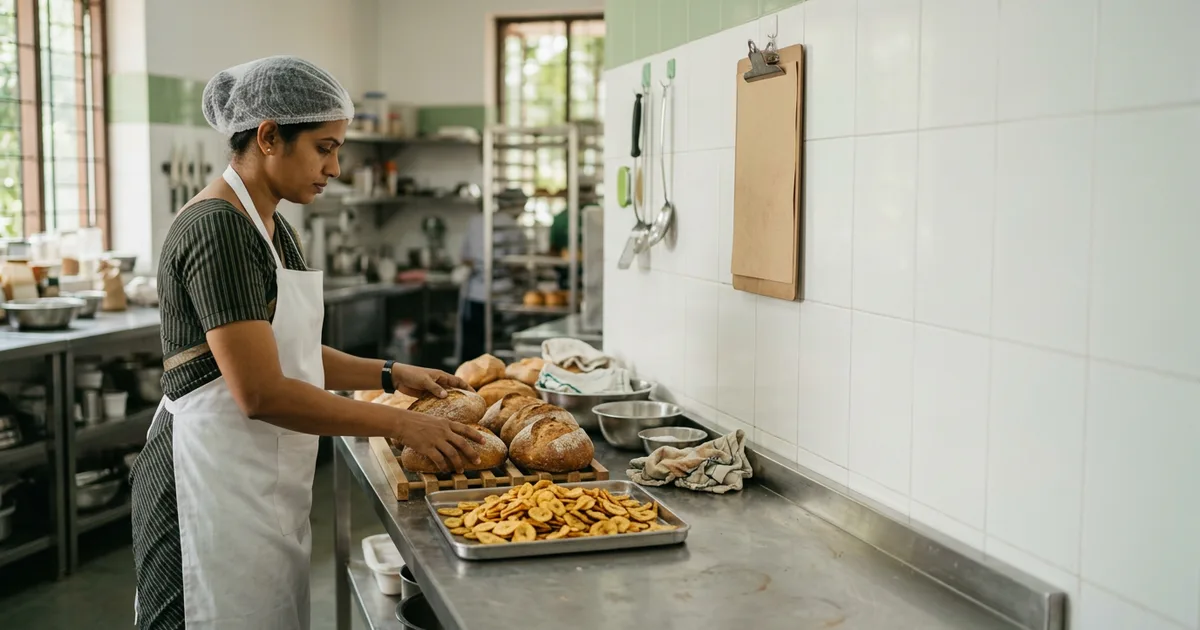
Two FSSAI changes this year rewrite the licensing basics for Kerala's bakeries, restaurants, home kitchens, spice packers and processors. The Food Safety and Standards (Licensing and Registration of Food Businesses) Amendment Regulations, 2026, notified on 10 March 2026, made licences and registrations valid until suspended, cancelled or surrendered, with no renewal. An FSSAI order of 13 March 2026 then raised the turnover limits for each category from 1 April 2026, so far more businesses need only a basic registration. A June amendment trimmed two operating conditions. This is what changed, and what still applies.
Perpetual validity: no renewal, but conditions
In FSSAI's own words in its FAQs of 27 March 2026, perpetual validity means licences and registrations "will remain valid, unless suspended, cancelled or surrendered", and food businesses "are not required to renew their Licenses/ Registrations". Any licence or registration issued on or after 1 April 2026 has perpetual validity, including Tatkal ones. The fee does not disappear: a business can pay the annual fee for any number of years at once, at any time of the year.
The trade-off is automatic suspension. Under the amended regulations a licence or registration is suspended if the annual fee is not paid or the required return is not submitted by its due date; it is revived when the fee and penalty are paid, and no food business may operate while suspended. A business that closes must inform the authority in writing within 30 days, and fees are not refunded on surrender. FSSAI is explicit that continuing compliance with hygiene, safety and other statutory requirements is unaffected.
The new turnover thresholds from 1 April 2026
- FSSAI Registration: turnover up to ₹1.5 crore.
- State Licence: turnover above ₹1.5 crore and up to ₹50 crore.
- Central Licence: turnover above ₹50 crore.
The thresholds apply to applications made on or after 1 April 2026. Existing businesses will be given time to migrate on FoSCoS, the migration is done by the system on the business's self-declaration without approval from the authority, no fee is charged for it, the licence number does not change, and a State licensee who moves down to registration has the fee already paid adjusted against the registration fee. FSSAI says more than 98 per cent of food businesses will now fall under the State's oversight, and the jurisdiction of licensing authorities is unchanged.
Street vendors and small food businesses
Street food vendors, hawkers, food carts and food trucks registered under the Street Vendors (Protection of Livelihood and Regulation of Street Vending) Act, 2014 are now deemed registered under the Food Safety and Standards Act, 2006, ending the double registration and double fee, though they must still follow the hygiene requirements of Schedule 4. The definition of petty food business operator has been widened to cover retailers, hawkers and those distributing food at religious or social gatherings, other than caterers.
Inspections become risk-based, and audits can be ordered
Inspection frequency now depends on the type of business, compliance history, third-party audit results and product risk, through what FSSAI describes as a computer-assisted system meant to reduce repeat inspections of compliant businesses. When directed by the Commissioner of Food Safety or the Food Authority, a business must obtain a food safety audit from an FSSAI-recognised third-party auditor at its own cost. High-risk categories such as dairy, meat, fishery products, packaged drinking water and infant food continue with their hygiene, safety and testing requirements even if they move to registration.
The June 2026 amendment
The Second Amendment Regulations, notified on 23 June 2026 and in force on publication, limit the licence condition on daily records of production and raw material use to manufacturing businesses, and state the first-in-first-out and first-expire-first-out rule for storing raw materials, work in progress and finished food, with retailers excluded from it.
What Kerala food businesses should do
- Check your turnover against the new bands and your category on FoSCoS before assuming a downgrade; businesses that need a Central licence for what they do rather than how much they sell, importers being the common example, should confirm their position.
- Pay the annual fee on time, or several years in advance, so the licence is never suspended automatically.
- File the returns your licence requires by their due dates; under the new rules a missed return suspends the licence.
- Keep hygiene records, supplier documents and test reports ready for a risk-based inspection or a directed audit.
- Register the brand you sell under as a trademark; FSSAI licensing protects the food, not the name on the pack.
Frequently Asked Questions
Do FSSAI licences still need renewal in 2026?
No, for licences and registrations issued on or after 1 April 2026: they remain valid unless suspended, cancelled or surrendered. The annual fee must still be paid, and FSSAI allows several years to be paid at once.
What is the new turnover limit for FSSAI registration?
Up to ₹1.5 crore from 1 April 2026. A State licence covers turnover above ₹1.5 crore up to ₹50 crore, and a Central licence covers turnover above ₹50 crore.
Will my licence number change if I move from State licence to registration?
No. FSSAI's FAQs say the number does not change on migration, no fee is charged, and the fee already paid is adjusted.
Can an FSSAI licence be suspended automatically?
Yes. Under the amended regulations it is suspended if the annual fee is unpaid or the required return is not filed by its due date, and it is revived on payment of the fee and penalty.
Do street food vendors need a separate FSSAI registration?
Not if they are registered under the Street Vendors Act, 2014; they are deemed registered under the Food Safety and Standards Act, 2006, but must follow the Schedule 4 hygiene requirements.
Sources
FSSAI, Food Safety and Standards (Licensing and Registration of Food Businesses) Amendment Regulations, 2026, notified 10 March 2026; FSSAI order of 13 March 2026 on revised turnover thresholds; FSSAI, FAQs on the Amendment Regulations, F. No. RCD-01002/1/2021-Regulatory-FSSAI-Part(1), 27 March 2026; FSS (Licensing and Registration of Food Businesses) Second Amendment Regulations, 2026, F. No. REG-11013/1/2026-Regulation-FSSAI, 23 June 2026, Gazette of India; SCC Online, 14 March 2026.
BookMyTM handles FSSAI registration, licensing and FoSCoS migration for food businesses across Kerala, along with ISO 22000 certification and trademark filing for food brands.